
Mobile Notary Areas Served in Philadelphia & Surrounding Pennsylvania Counties
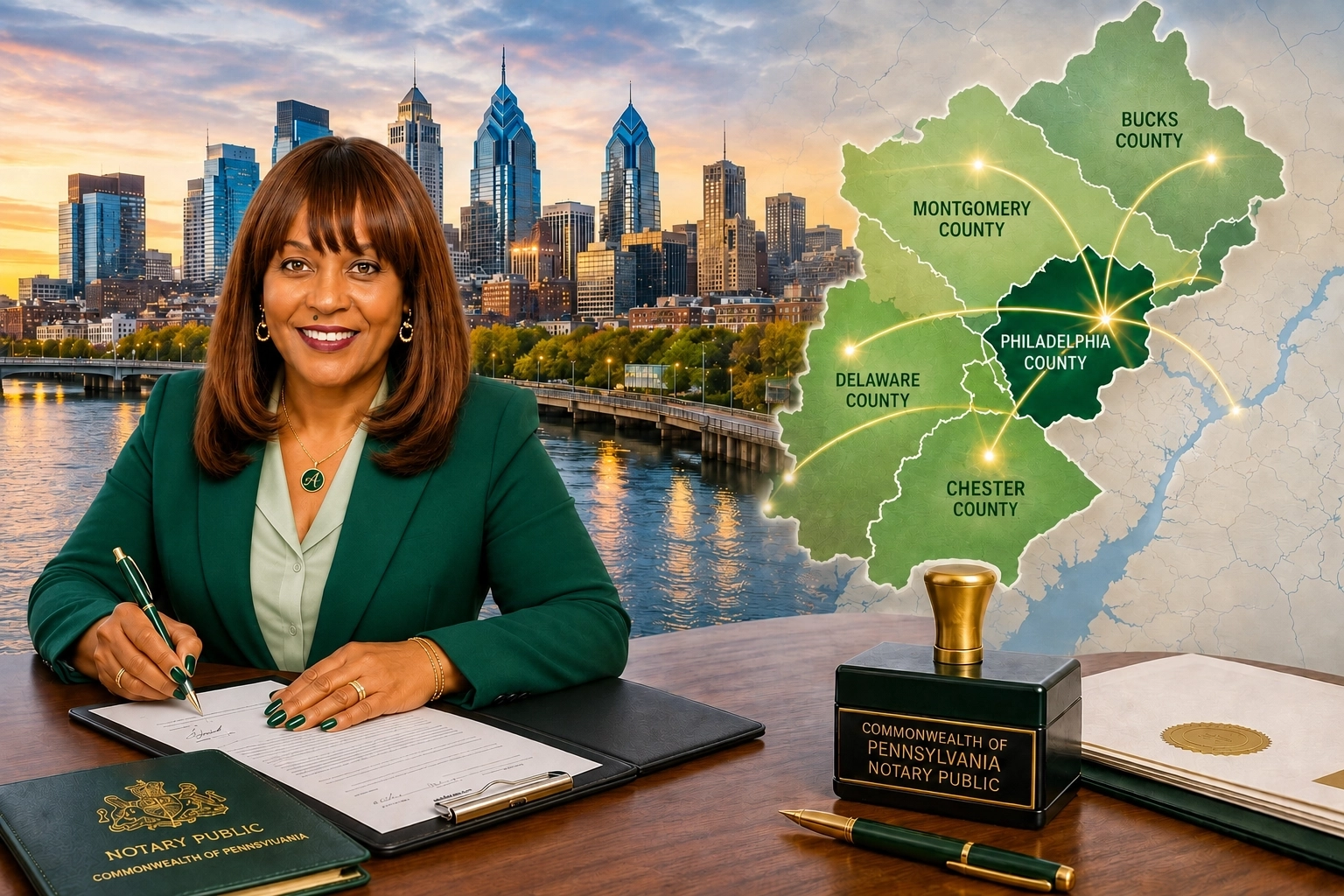
Trusted Pennsylvania Mobile Notary Serving the Greater Philadelphia Area
Arlene Mobile Notary Services travels to homes, hospitals, nursing homes, assisted living facilities, rehabilitation centers, attorney offices, businesses, and other agreed-upon locations throughout the Philadelphia region. Services include mobile notarization, hospital notarization, nursing home notarization, estate planning documents, power of attorney documents, trust documents, real estate documents, affidavits, apostille-related documents, Remote Online Notary services, and In-Person Electronic Notary services.
Whether you need a notary in Philadelphia, Delaware County, Montgomery County, Bucks County, or Chester County, Arlene provides patient, professional service for individuals, families, attorneys, title companies, healthcare facilities, and businesses.
What Families Should Prepare Before the Notary Arrives
Proper preparation helps prevent delays, refusals, and incomplete notarizations. Before scheduling a nursing home notary appointment, please make sure the following items are ready:
- The signer must be physically present for the notarial act.
- The signer must be awake, alert, aware, and willing to sign.
- The signer must understand that they are signing the document.
- The signer must have valid, unexpired government-issued photo identification.
- The document should be complete before the notary appointment except signatures and initials.
- Blank spaces should be completed or addressed before notarization.
- Witnesses should be arranged in advance if the document requires them.
- The facility should allow the notary to meet privately with the signer when needed.
Philadelphia, Pennsylvania
Mobile notary services throughout Philadelphia for homes, hospitals, nursing facilities, rehabilitation centers, attorney offices, businesses, senior care communities, and other agreed-upon Pennsylvania locations.
Delaware County, Pennsylvania
Serving Delaware County communities with professional mobile notary appointments for powers of attorney, estate planning documents, healthcare directives, real estate paperwork, and general notarizations.
Montgomery County, Pennsylvania
Mobile notary services available throughout Montgomery County for families, healthcare facilities, attorneys, nursing homes, businesses, and real estate transactions.
Bucks County, Pennsylvania
Professional mobile notary appointments for Bucks County residents, families, attorneys, businesses, hospitals, and senior care facilities requiring reliable notarization services.
Chester County, Pennsylvania
Serving Chester County by appointment for trusts, powers of attorney, wills, estate planning documents, affidavits, healthcare directives, and general notarial services.
Philadelphia Neighborhoods & Nearby Communities
Mobile notary appointments may be available in Center City, University City, West Philadelphia, South Philadelphia, North Philadelphia, Northeast Philadelphia, Northwest Philadelphia, Germantown, Mount Airy, Chestnut Hill, Roxborough, Manayunk, Wynnefield, Overbrook, East Falls, Fishtown, Kensington, Port Richmond, Bridesburg, Mayfair, and surrounding Philadelphia neighborhoods.
Common Mobile Notary Appointment Locations
Arlene Mobile Notary Services frequently assists clients at private residences, hospitals, nursing homes, assisted living facilities, rehabilitation centers, law offices, title companies, senior communities, business offices, and other approved public meeting locations.
Notary Services Available by Area
What If the Nursing Home Resident Does Not Have Valid ID?
If the signer does not have valid, unexpired government-issued photo identification, a credible witness option may be available in certain situations. This usually requires credible witnesses who personally know the signer, can present valid identification, and are not named in or benefiting from the document.
Credible witness requirements must be handled carefully. Please discuss the situation before the appointment so the proper plan can be reviewed.
Capacity, Awareness, and Willingness to Sign
A nursing home notary appointment can only proceed if the signer appears willing and able to communicate that they understand the signing. The notary must be able to identify the signer and observe that the signer is signing voluntarily.
If the signer is confused, heavily medicated, asleep, unable to communicate, pressured by others, or does not appear willing to sign, the notarization may be refused.
Witnesses for Nursing Home Documents
Some documents may require one or two witnesses in addition to notarization. Witness requirements are usually determined by the document, the attorney, the receiving agency, or Pennsylvania law.
Arlene Mobile Notary Services does not choose witnesses for your document and cannot decide whether witnesses are legally required. If witnesses are needed, the family should arrange them before the appointment unless prior arrangements have been discussed.
- All witnesses must present valid, unexpired government-issued photo identification at the time of the notary appointment.
- Witnesses must be at least 18 years of age.
- Witnesses should not be named in, financially benefit from, or have a direct interest in the document being signed.
- Witnesses must be physically present at the time the document is signed.